Catch 1972
Help Me Mama, I Got The Pre-Season Blues

The publication of the fixture list was a masterclass in bureaucratic inevitability. It arrived because it had to arrive, yet its arrival caught everyone entirely by surprise, including those who claimed to have known it all along.
To the upper-crust gentlemen of The Times, spring was officially certified by hearing the first cuckoo. To the football supporter, the football campaign was certified by an Excel spreadsheet detailing exactly when they would be required to hate West Ham.
This created an immediate crisis for the modern fan, who suffered from the terrible affliction of needing to be "In the Know" (ITK).
To be ITK meant knowing everything before it happened, which was entirely useless because once it happened, because everyone else knew it too, thereby rendering the prior knowledge obsolete.
Nick, however, practiced a strict policy of knowing absolutely nothing. He was simply too long in the tooth to worry about tactics, signings, or executive decisions. He had discovered that the less he knew about what the club was doing, the less he had to worry about them doing it wrong.
Oh no, babe. Not him.
The season proper was scheduled to begin on August 15th with an away trip to Bristol City. This was a paradox in itself, as Bristol City was precisely where the previous season had properly begun in a glorious, 1-0 triumph that degenerated into a magnificent post-match brawl.
It was a beautiful, chaotic scuffle, notable chiefly for the total lack of participation by a goalkeeper named Stephen Benda. Benda had stood watch with his hands shoved deep into his pockets, looking profoundly forlorn, while his teammates vigorously assaulted the opposition.
Nick, a man of peace, viewed this as an unforgivable offense. At Millwall, a man of peace was required to fight for the right to be peaceful. If you would not step in when a brawl was in progress, you had no business being at a club that prided itself on having them.
Whether August would bring a similar level of kerfuffle remained an open question. Nick fervently hoped it would, because without drama, there was only football, and football was far too stressful to enjoy without a bit of violence to break the tension.
The first home game was a 12:30 kickoff against Norwich City at The Den. Nick couldn't wait. He had developed a profound contempt for the summer. Summer was a time when nothing happened very loudly, and he was eager for it to be over.
Instead of traditional English footballers with names like bricklayers, Millwall was now signing continental players gauche, rechts und zentrum. It was a brilliant and terrifying strategy. Chelsea had once been a European club masquerading as a London outfit; now Millwall was doing the exact same thing, only with fewer trophies and more resentment.
Even their solitary domestic signing, Jensen Metcalf, possessed a distinctly foreign frisson. To Nick, who hailed from the Mottingham Estate, the name sounded like fine dining—a luxury he was thoroughly ill-equipped to digest.
This was not the Millwall he knew, but it was exactly the Millwall the club had decided to manufacture under the "production model."
Nick supported Chairman Jimmy Berylson’s quest for the Premier League, even if it meant succeeding through methods that made absolutely no sense - eg selling your darlings and reinvesting.
Like all old salts, Nick viewed the 1970s through a romantic, pink-tinged fog that grew rosier the further away it got. Yet, there was something tantalizing about watching foreign youngsters develop into a European talent pool in South London.
Of course, there was the lingering hangover of May’s failed play-off campaign. There was a distinct danger that the new season would start with an "after the Lord Mayor’s show" quality, which was compounded by the fact that the new players from Belgium and France would require time to bed in. To bed in, they needed patience. But to have patience, they needed Millwall fans, and Millwall fans were inherently incapable of patience. It was a perfect trap: the team needed time to get good, but the fans would only give them time if they were already good.
A kind of Catch 1972 you might say.
Regardless, Nick hoped this new blog would become a regular feature. He promised no tactical insights, zero analysis, and a complete, blissful ignorance of what "xG" actually meant. Expected Goals were an absurdity; you either scored a goal or you didn't, and expecting one didn't make the ball cross the line.
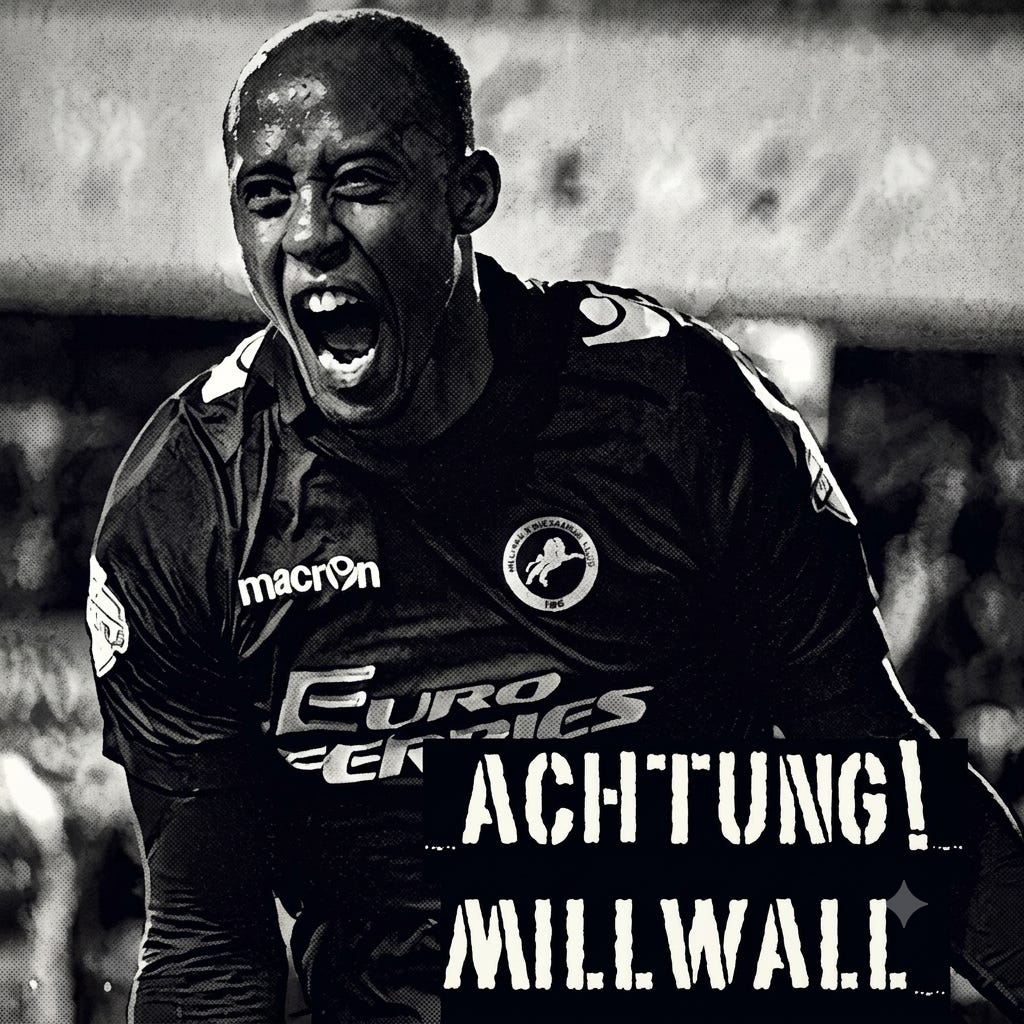
Instead, much like his Achtung! Millwall podcast, he would offer only the warped, jaundiced perspective of a mind permanently arrested in 1972. It might provide some diversion, or at least a brief amusement before the inevitable disappointment set in.
Arrivederci Millwall.
Sounds like Nick might like this extract from my novel, which features a Millwall fan on the first day of the 2015/16 season, displaying a stunning lack of patience.
https://georgewriting.substack.com/p/delivery